Period poverty is one of Australia's most overlooked social issues, and it affects far more people than most of us realise. From teenagers skipping school to women in hospitals going without basic menstrual hygiene products, the impact is real, widespread, and entirely preventable.
At Knicked, we believe access to period products is a right, not a privilege. This article explains what period poverty is, who it affects in Australia, and most importantly, what you can do to help.
"Access to period products is a right, not a privilege." Share the Dignity Australia
What Is Period Poverty?
Period poverty is the inability to access adequate menstrual hygiene products, education, or sanitation facilities due to financial hardship or social stigma. It affects people of all ages, from young girls at school to older women experiencing homelessness, domestic violence, or hospitalisation.
Period poverty is not just about not being able to afford pads or tampons. It also includes:
- Lacking access to clean, private bathroom facilities
- Being unable to afford pain relief for menstrual symptoms
- Missing school, work, or social activities due to period-related shame or lack of products
- Using unsafe alternatives such as toilet paper, rags, or newspaper
- Experiencing stigma or cultural shame around menstruation
How Common Is Period Poverty in Australia?
Australia is one of the wealthiest nations in the world, yet period poverty remains a significant issue. Research and advocacy by organisations like Share the Dignity has consistently shown that thousands of Australians struggle to afford or access period products every month.
Key facts about period poverty in Australia:
- 1 in 5 Australian women have struggled to afford period products at some point in their lives (Share the Dignity)
- Women experiencing homelessness, domestic violence, or financial hardship are disproportionately affected
- Many public hospitals do not routinely provide free menstrual products to patients
- Period stigma continues to prevent open conversations, particularly in schools and healthcare settings
- Girls in regional and remote communities often face greater barriers to access
The good news? Awareness is growing, and Australians are stepping up to help.
Who Is Most Affected by Period Poverty in Australia?
Period poverty does not affect everyone equally. The following groups are most vulnerable:
Women and Girls Experiencing Homelessness
For women sleeping rough or in crisis accommodation, accessing period products is an everyday challenge. Without a stable income or address, even basic menstrual hygiene becomes difficult to maintain, affecting dignity, health, and wellbeing.
Survivors of Domestic Violence
Women fleeing domestic violence often leave with nothing. Period products are rarely included in emergency kits, yet they are an immediate and essential need. Organisations like Share the Dignity work directly with domestic violence shelters to fill this gap.
Hospital Patients
Many public hospitals across Australia do not provide free menstrual products to patients. Women recovering from surgery, illness, or childbirth are often expected to supply their own. This is a significant burden for those already under financial or emotional stress.
Teenagers and Young People
Period poverty affects young people too. Teens from low-income families may use inadequate products, miss school during their period, or feel too embarrassed to ask for help. This has a direct impact on educational outcomes and social confidence.
Women in Regional and Remote Communities
In rural and remote Australia, access to period products can be limited by geography, availability, and cost. Products that are readily available in cities may be expensive or hard to find in regional areas.
Why Period Stigma Makes It Worse
Period poverty is made worse by the stigma that still surrounds menstruation. Despite being a completely natural biological process, periods are still considered taboo in many communities, making it harder for people to ask for help, access products, or advocate for their needs.
In some cultures, menstruating women are still isolated, restricted from daily activities, or considered "impure." While these practices may seem distant, the underlying shame around periods exists in Australian communities too, in schools, workplaces, and healthcare settings.
Breaking the silence around periods is one of the most powerful things we can do to address period poverty. Normalising conversations about menstrual health helps reduce shame, encourages help-seeking, and builds community support.
How You Can Help Fight Period Poverty in Australia
You don't need to be a policy maker or a large organisation to make a difference. Here are practical, meaningful ways every Australian can help.
1. Support Share the Dignity's Campaigns
Share the Dignity is Australia's leading period poverty charity. They run several campaigns throughout the year that make it easy to get involved:
#ItsInTheBag
Share the Dignity's flagship annual campaign runs each November, with collection points at Bunnings stores across Australia. The idea is simple: fill a bag with essential items and donate it to someone in need in time for Christmas.
How to participate in #ItsInTheBag:
- Find a new or good-condition bag (handbag, backpack, or duffel)
- Fill it with essential items, including period products, toiletries, snacks, and personal care items
- Add a handwritten note or a small personal touch if you'd like
- Drop it at your nearest Bunnings store during the collection window (typically 19 to 28 November)
- Know that your donation will go directly to a woman or girl in need
In recent years, the campaign has distributed tens of thousands of bags to charities and women across Australia. It's one of the most impactful and accessible ways to give back.
Dignity Drives
Held twice a year (typically March and August), Dignity Drives are community collection events where Australians donate period and sanitary products. Donations are distributed to registered charities across the country.
How to donate to a Dignity Drive:
- Drop off period products at a local collection point during the drive
- Mail donations directly to Share the Dignity (PO Box 345, Sandgate QLD 4017)
- Make an online financial donation. As little as $5 can provide a pack of sanitary products
- Donate at the checkout when shopping at participating Woolworths stores
Pad Up Public Health
This campaign calls on State and Federal Health Ministers to provide free menstrual products in all public hospitals. You can support it by downloading a template letter from the Share the Dignity website and sending it to your local MP or State Health Minister.
It takes five minutes and sends a clear message: menstrual hygiene is healthcare.
2. Shop Knicked Clearance and Give Back
Shop Our Clearance Sale and Support Period Equity
Right now, you can shop Knicked's clearance collection and feel even better about your purchase. 100% of profits from our clearance products are donated directly to Share the Dignity Australia.
It's a simple way to grab quality period underwear at a reduced price while directly funding period products for women and girls in need across Australia.
Every pair sold from our clearance range puts money directly into the hands of an organisation that distributes period products to those who need them most. Shopping sustainably and giving back at the same time. That's the Knicked way.
3. Donate Period Products Directly
Many local charities, food banks, women's shelters, and community organisations accept donations of period products year-round. A box of pads, tampons, or reusable period underwear can make an enormous difference to someone in need.
When donating period products, consider including:
- Pads (various absorbencies)
- Tampons (various absorbencies)
- Reusable period underwear (new, in packaging)
- Menstrual cups (new, in packaging)
- Pain relief (where accepted)
- Wet bags for reusable product storage
4. Advocate for Period Equity in Your Community
Advocacy doesn't have to be complicated. You can:
- Talk openly about periods to help reduce stigma
- Encourage your child's school to stock free period products in bathrooms
- Ask your workplace to provide period products in bathrooms
- Share period poverty awareness content on social media
- Support businesses and brands that donate to period poverty causes
- Write to your local MP about period equity in public health settings
5. Choose Reusable Period Products
One of the most sustainable and cost-effective ways to support period equity is to switch to reusable period products. This helps your own family and reduces the broader demand for disposable products.
Reusable period underwear, menstrual cups, and cloth pads significantly reduce the ongoing cost of managing periods. Over time, this can free up household budget for other essentials and reduce the volume of single-use period waste going to landfill.
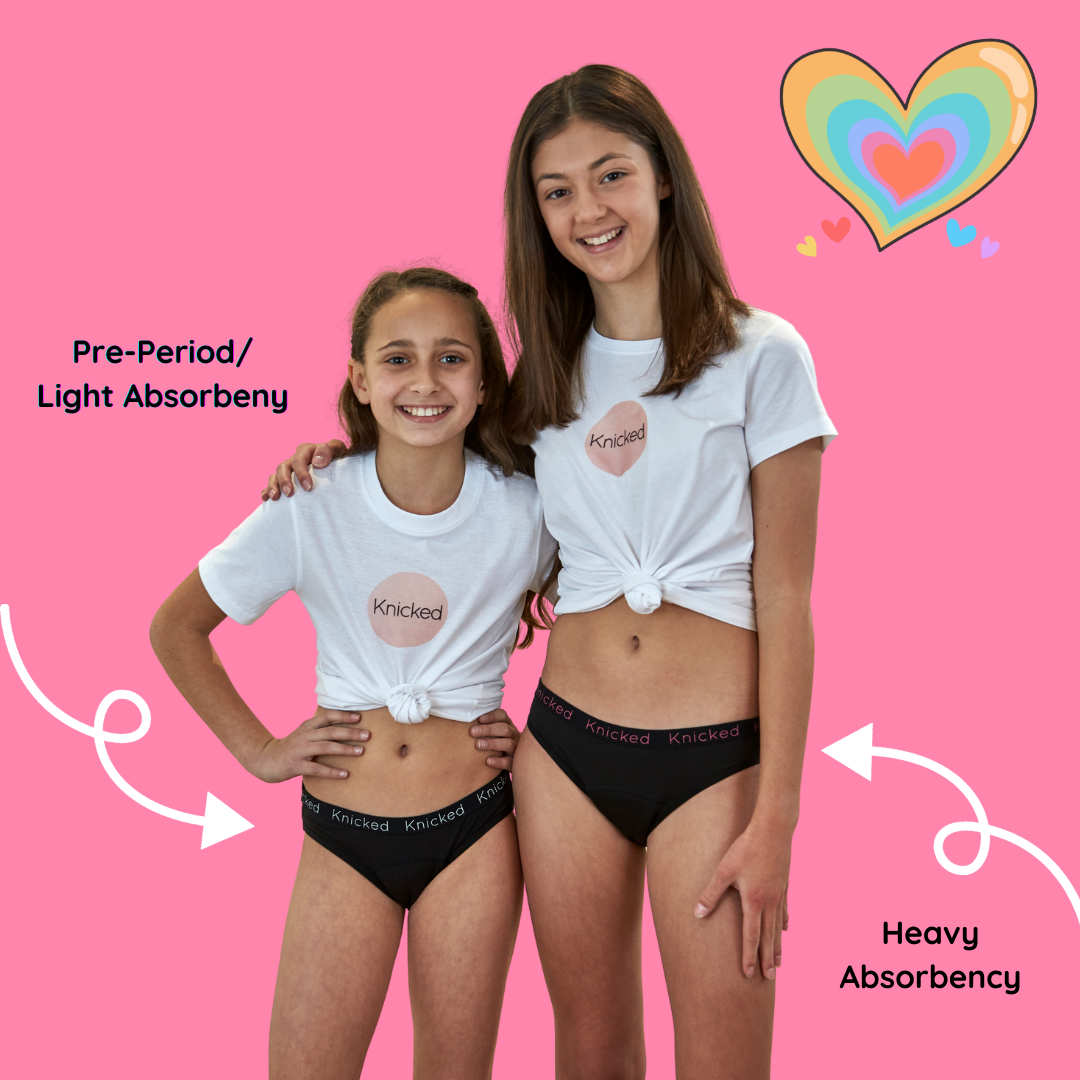
At Knicked, our period underwear is designed specifically for teens and tweens, with sizing from age 8. Each pair lasts 2 or more years, replacing hundreds of disposable products. For families managing tight budgets, the long-term savings are significant. Some state governments also offer a 50% rebate on reusable period products.
Reusable products also make excellent donations. A single pair of period underwear can last years, providing ongoing support rather than a one-time fix.

The Role of Reusable Period Products in Addressing Period Poverty
Disposable period products are expensive. Over a lifetime, a single menstruator can spend thousands of dollars on pads and tampons. This is a significant financial burden for low-income households.
Reusable period products offer a long-term solution:
| Product Type | Average Lifespan | Approximate Cost | Environmental Impact |
|---|---|---|---|
| Disposable pads | Single use | ~$10 to $15/month | High. Ends up in landfill |
| Disposable tampons | Single use | ~$8 to $14/month | High. Ends up in landfill |
| Period underwear | 2 to 3 years | ~$30 to $45/pair upfront | Low. Reusable and washable |
| Menstrual cup | Up to 10 years | ~$40 to $60 once | Very low. Minimal waste |
For families already experiencing financial stress, the upfront cost of reusable products can be a barrier. This is why donation programmes that include reusable period products, and government rebate schemes, are so important.
Learn more: Everything You Need to Know About Period Underwear
How Knicked Supports Period Equity
At Knicked, supporting period equity is part of who we are. We've partnered with Share the Dignity's Dignity Drive campaigns and sold our Kindness Socks with all proceeds donated to Share the Dignity Australia.
Our clearance sale takes that commitment even further. 100% of profits from every clearance item sold go directly to Share the Dignity. When you shop our sale, you're not just saving money. You're funding period products for women and girls who need them most.
Beyond fundraising, we believe that making high-quality, affordable, reusable period underwear accessible to Australian teens and tweens is itself an act of period equity. When young people have reliable, long-lasting period protection, they can attend school with confidence, participate in sport, and manage their periods without anxiety, regardless of their family's financial situation.
We also advocate for open, shame-free conversations about periods, because education is the foundation of equity.
Frequently Asked Questions About Period Poverty in Australia
What is period poverty?
Period poverty is the inability to access adequate menstrual hygiene products, education, or sanitation due to financial hardship or social stigma. It affects people of all ages and backgrounds, and can result in missed school or work, use of unsafe alternatives, and significant impacts on health and dignity.
How common is period poverty in Australia?
Period poverty is more common than most Australians realise. Research by Share the Dignity has found that 1 in 5 Australian women have struggled to afford period products at some point. Women experiencing homelessness, domestic violence, or financial hardship are most affected, as are girls in regional and remote communities.
How can I help women experiencing period poverty in Australia?
There are several practical ways to help. You can donate period products to local charities or through Share the Dignity's Dignity Drive campaigns, support the #ItsInTheBag campaign each November, make an online donation to Share the Dignity, advocate for free period products in schools, hospitals, and workplaces, or shop Knicked's clearance sale where 100% of profits are donated to Share the Dignity.
What organisations help fight period poverty in Australia?
The leading organisation is Share the Dignity, which runs the #ItsInTheBag, Dignity Drive, and Pad Up Public Health campaigns. Other organisations include local women's shelters, food banks, and community health centres that accept period product donations year-round.
Are reusable period products a good long-term solution to period poverty?
Yes. Reusable period products like period underwear and menstrual cups significantly reduce the ongoing cost of managing periods. A single pair of period underwear can last 2 to 3 years, replacing hundreds of disposable products. While the upfront cost can be a barrier, government rebate schemes and donation programmes are helping to improve access. Reusable products are also far better for the environment.
How can families reduce the ongoing cost of periods?
Switching to reusable period products is the most effective long-term strategy. Period underwear, menstrual cups, and cloth pads all have a higher upfront cost but save money over time. Some Australian state governments offer rebates of up to 50% on reusable period products. Check if you're eligible here. Buying in bundles and caring for products properly also extends their lifespan.
What items should I include in a period poverty donation bag?
Good items to include are pads (various absorbencies), tampons, reusable period underwear (new, in packaging), menstrual cups (new, in packaging), wet bags, and personal care items like soap and deodorant. For #ItsInTheBag donations, Share the Dignity provides a full suggested items list on their website.
Key Takeaways
- Period poverty affects thousands of Australians, particularly women experiencing homelessness, domestic violence, hospitalisation, or financial hardship.
- Period stigma makes the problem worse by preventing open conversations and help-seeking.
- Share the Dignity Australia runs several campaigns, including #ItsInTheBag, Dignity Drives, and Pad Up Public Health, that make it easy to get involved.
- Knicked's clearance sale donates 100% of profits to Share the Dignity. Shop the sale to give back while you save.
- Reusable period products offer a sustainable, cost-effective long-term solution for individuals and families.
- Everyone can help through donations, advocacy, open conversations, or simply choosing products from brands that give back.
Ready to Make a Difference?
Period poverty is a solvable problem, and every action counts, no matter how small. Whether you donate a bag of period products, write to your local MP, shop our clearance sale, or simply start an open conversation about periods with your family, you're contributing to a more equitable Australia.
If you're exploring reusable period products for your own family, Knicked's period underwear is a great place to start. Designed specifically for teens and tweens, our underwear is comfortable, leak-proof for up to 10 hours, and built to last. It's a smart investment for families and a meaningful donation for those in need.
Shop Clearance and Give Back Support Share the Dignity
Want to learn more about period health and menstrual products? Visit our Period Talk blog for honest, supportive guides written for teens, tweens, and their families.


